

In Memory
In loving memory of some of our Tigger House friends who have crossed the rainbow bridge.
We remember them fondly.
King Kong
At first, as we picked our way among the wreckage, we didn’t notice him at all. The bomb had landed in a crowded alley. The ambulances had gone, and people were sweeping up glass shards. At the end of the alley, we noticed a dark shape, half-sunken in the muck. It was a huge dog, emaciated and covered with sores. Several boys were throwing chunks of cement at him. He kept trying to rise but fell back. When the boys saw us watching, they ran away.
The police shouted at us to leave, but later we returned in a truck, carrying a canvas tarp. The dog had not moved. My driver and a friend slowly lifted him out of the muck. He groaned but was too weak to resist. A small crowd gathered, and a few boys snickered, but several men gave us a silent thumbs-up.
Afghan society was tough and unforgiving, with a history of conflict. People were inured to hardship, loss and violence. There was respect for the strong and little pity for the weak. Dogs were kept to herd flocks or guard homes, fed scraps and let out to patrol at night. But dogs without homes or purpose were reviled as dirty, dangerous and diseased. Streets were full of hungry stray dogs, and butchers would toss them scraps, but street urchins would pick up stones to drive them away.
A few wealthy people bought imported breeds as status symbols, and large mastiffs were trained to fight. In villages, men gathered on holidays to cheer and wager on their favorites. Winners were rewarded with praise and hearty food, but those who grew too old or feeble to fight were eventually left to wander off or die.
The dog in the garbage pit had once been a fighter. His ears and tail had been cut off long ago with a knife, to prevent an adversary from latching on to a sensitive spot. His skin had been ravaged by mange and his fur worn to thin, leprous patches. His head was huge, with a powerful brow that dwarfed his starved body, but he could barely lift it now. When we placed him in the truck, he sighed and lay still.
And so, on a muggy day in 2015, King Kong came to Tigger House: a battered warrior whose story we would never learn, but whose character would have a lasting impact on all of us.
First, though, he had to become a dog again. He arrived a helpless, broken monster who had to be fed by hand. The staff was afraid to touch him at first, but I crept into his pen and placed a bowl of chicken broth next to his muzzle. After a while, he began to lap it up. Slowly, his appetite returned, his fur grew back to a thick auburn coat, and he became strong enough to stand.
At the same time, his personality also began to emerge. He was ponderous and gentle, with a playful streak. When the cook brought his dinner, King would rub his huge head against the man’s legs. When I came to visit, often bringing a snack, he would rush to the gate and put up a huge paw.
One day when I approached, he shuffled his feet from side to side, like an awkward teenager trying to dance or maneuver a soccer ball. It suddenly struck me that King had never learned to play, only to fight. He had never been a puppy or known human affection. The thought broke my heart, and I vowed to make up for it. From then on, whenever I visited, we would dance a few steps in tandem or bat a tennis ball around the floor of his pen. Every time, it made me laugh for joy.
The shelter staff workers had been raised with strict religious taboos against touching dogs, and they were too dignified to play with them – let alone help me wash them. But they secretly admired King because he had been a fighter, and he was one of the few resident dogs they called by name. In a harsh society with little room for compassion, I was heartened by any display of kindness to dogs, no matter what prompted it. Sometimes I glimpsed a guard slipping King an extra piece of meat from the cookpot, and we would share a conspiratorial smile.
Over the years, King became the eminence grise of Tigger House -- a handsome ambassador for all the shunned and starving street dogs of Kabul, an honorary protector of the premises and the designated uncle for the many orphan pups we took in. He patiently tolerated their antics but warned them away from his dinner bowl with a short, single growl.
Then one day, a small female hound named Sweeta, who had been blinded in one eye, was placed in his pen while her wound healed. Within a few days, King was besotted. Both dogs had been sterilized, and Sweeta was half his size, but the magnetism between them was electric. He followed her around like a lovesick pup. She nuzzled up to him and then pranced off coquettishly. For the first time in his life, King Kong was in love.
Almost from the day we rescued him, and as the years passed, I felt that King should remain at Tigger House forever. It was a small and shabby home, but he was safe and happy there. More importantly, he meant something special to everyone who worked there. Hundreds of dogs and cats passed through the premises, but King Kong came to represent its permanent mission: to heal, protect and dignify animals in a society where they had little intrinsic worth.
Inevitably, King’s health declined with age; his eyesight deteriorated and his arthritic legs grew weaker. At the same time, after surviving years of hardship and conflict, Tigger House also faced new obstacles. In the fall of 2021, during the chaotic US departure and Taliban return, several rescue groups tried to evacuate several large groups of dogs by air, and Sweeta was one of them. We never learned what became of her, and a few months later, old age and infirmities finally took our King.
I was home when the staff called to tell me he was gone, and to ask me what to do with his remains. There were many official restrictions on the burial of animals, as well as cultural and health-related taboos. Our usual procedure was to wrap animal remains in heavy plastic bags for the city trash service.
But King Kong was special. His years at Tigger House had meant something to everyone there, even though it was never directly expressed. No one wanted to imagine him flung from a garbage truck into a landfill. When that sad call came, my first thought was that we should bury him at Tigger House. Perhaps we tear up the concrete driveway, I suggested. After nearly 17 years of arguing over the slightest issue, the entire shelter staff agreed immediately.
A month later, when I returned for a brief visit, I went directly to the shelter to see King’s grave. The guard pointed to an unmarked flagstone under a grape trellis. I had brought a bag of small white stones, which Afghans arrange on their loved ones’ graves. I gave them to the cook, an older, pious man who spoke no English and was not especially fond of dogs, but who had always been respectfully attentive to King.
A week later, when I returned to say goodbye, the stones had been laid out in a careful pattern on the anonymous slab, and no one had disturbed them.


Pai Kaj and Abby
These are the stories of two beloved dogs, Pai Kaj and Abby. They were both sweet creatures who came to live in Tigger House many years ago and had permanent disabilities. Abby, a small female hound rescued by a French military unit, lost an eye that eventually healed but left her half-blind. Pai Kaj, a big shaggy shepherd, could barely walk on front legs that were badly deformed from malnutrition. He was stoic, patient, and beloved by the Tigger House staff.
Both dogs were eventually brought to the US and adopted by loving families in Virginia. Both brought great joy to their humans over the years and navigated life with good cheer. Last spring, both dogs developed chronic health problems and the families reluctantly agreed to have them euthanized. Later, I asked both families to share memories of their years with Pai and Abby.
Pai’s family had already adopted two disabled dogs when she joined them; a tiny hound with a missing leg and a feisty pug with deformed front legs. Pai fit in well with the pack, and after she was fitted for special leg braces, the family often took her on slow but eager walks. She often slept near the other dogs, but preferred to spend her days in the office of her adoptive dad.
“Pai was the sweetest and easiest dog I'd ever met,” he wrote. He said he had once been afraid of dogs, and the other two had helped him overcome that fear. But when Pai joined them, he wrote, “she was the missing piece of the puzzle. She showed me what it was like to be chosen, to be a dog's special person.”
Abby joined her American family during the Afghan war, where her adoptive dad had been stationed. A rescue group in Texas helped us send her to the States and found her a home with the military family. Eventually they moved to Virginia and I visited Abby there several times. She slept with the family cats and was looked after by their huge, gentle adopted mastiff.
Abby was shy and uncertain with strangers at first, but the family took her on many summer vacations, and they said she became a great conversation piece and advocate for adopting other dogs with wartime disabilities. After 14 years, her health deteriorated and the vet said it was time to let her go. The family invited neighbors to say goodbye.
“We told her story a hundred times,” her mom told me. “Abby really touched our lives.” And when the final moment came at the vet’s office, she said, it was the first time she had ever seen her husband cry.
Minnow
Sweet Minnow had a profound impact on all those who grew to love and know her. Her family remembers and celebrates her life and carries her spirit with them.
They write, "Minnow came into our lives unexpectedly after having gone through some significant trauma. She “grew up” on the streets of Kabul, then spent several years at the shelter culminating in an unfortunate incident where another dog attacked her. After recovering from her surgery, she endured the long flight from Afghanistan to Milwaukee where we met her for the first time.
After all that, she could have easily been forgiven for having a bad attitude for life, but that wasn’t Minnow. While she was tentative at first, she quickly showed us how sweet and kind she was and how she was always "just happy to be here." She loved her sister Riley (a Great Dane/Hound mix), camping trips, treats and LOVED the snow. She taught us resilience, kindness, and patience.
We didn’t have nearly enough with our kind girl, but the time we did get was precious and priceless."
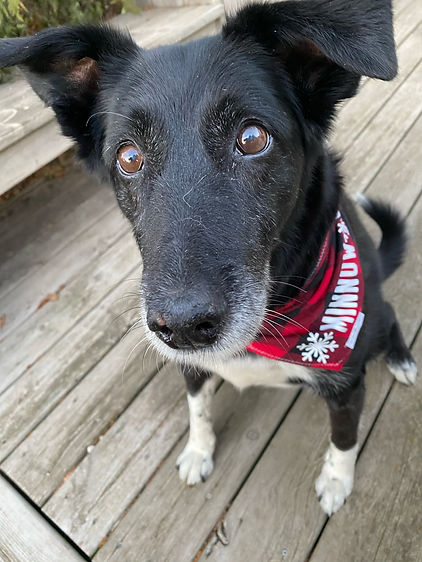

Sepai
Stay tuned for memorial.